
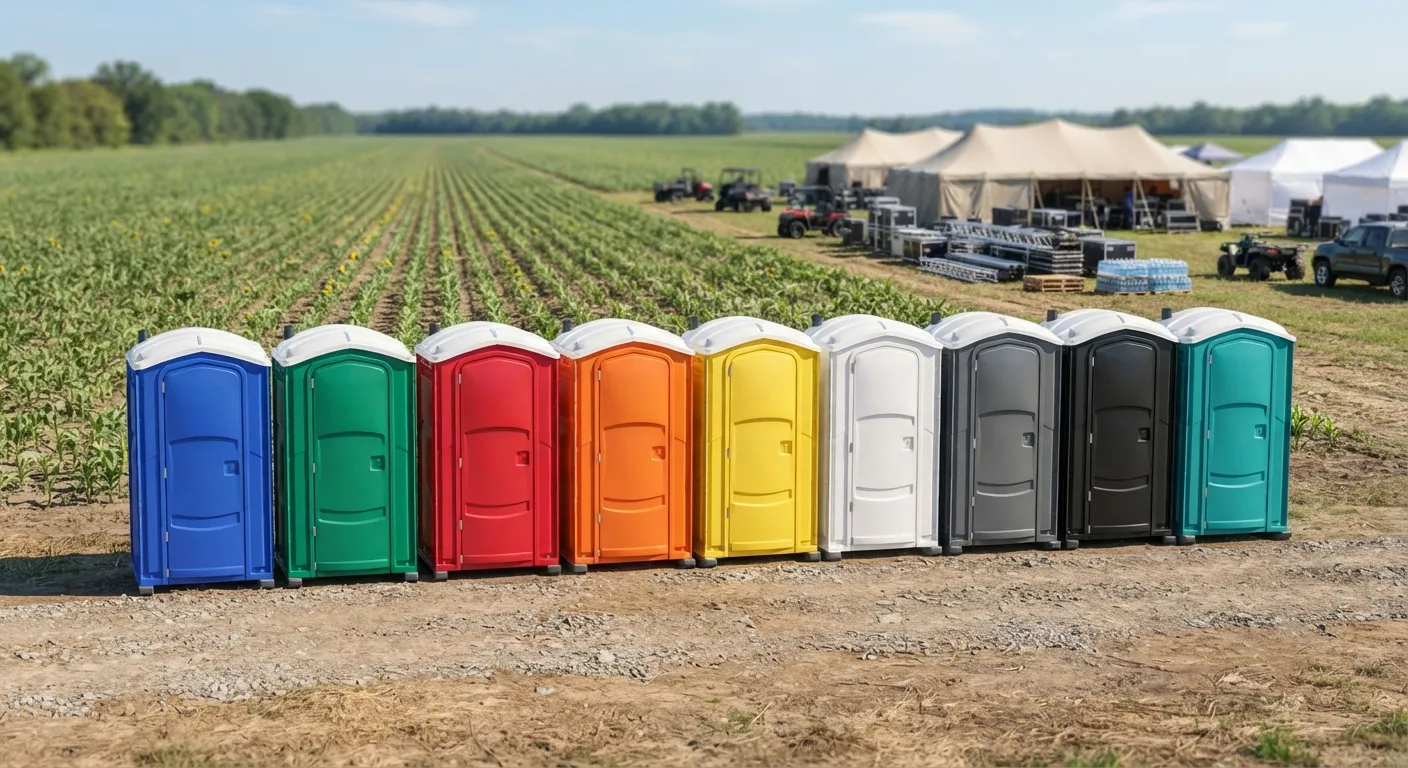
What do vineyards and farms actually need for restrooms?
Federal field sanitation rules do not care whether you are picking grapes or walnuts. OSHA 1928.110 sets the baseline for hand-labor operations: potable water, a toilet and a handwashing facility, and none of it more than a quarter mile from where people are working. On a spread-out Napa vineyard, that quarter-mile radius usually means more than one standard porta potty rental placed at different rows or blocks, not one unit parked by the gate. Crews moving block to block during harvest need units that move with them, and that is where a portable toilet rental plan built around your picking calendar earns its keep.
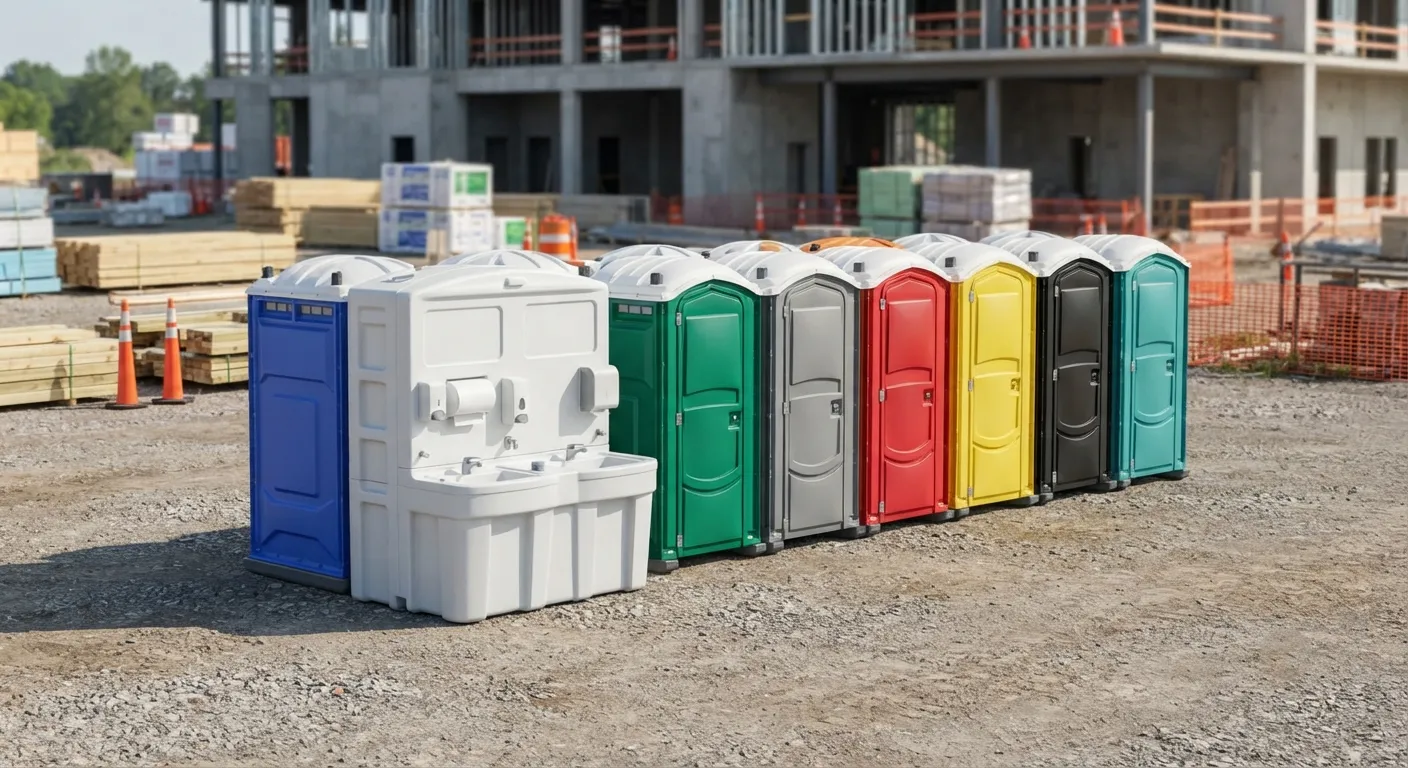
Water matters as much as the toilet. OSHA 1926.51(a)(1) calls for an adequate supply of potable water at any place of employment, and a lot of Napa properties are on well water or too far from municipal lines to run a hose to every block. Pairing a handwashing station rental with each toilet cluster covers both the water and the handwashing requirement in one stop, and a portable sink rental works well near packing sheds or crush pads where workers handle fruit by hand. If your labor camp or barn also needs a place to change or store gear, a storage container rental or a mobile office trailer rental can sit at the same staging area as the restrooms.
How many units does a Napa farm or vineyard need?
Start with your peak headcount, not your average day. A 60-acre block with 40 pickers during crush needs different coverage than the same block in the off season with a 4-person maintenance crew. Our how many porta potties do I need guide walks through the math, but the quarter-mile rule from OSHA 1928.110 is the piece that trips people up: it is a walking distance, not a straight-line map distance, so rows, terraces and creek crossings all count against you. A property near American Canyon, about 10.9 miles south of central Napa, laid out across sloped terrain will often need units staged at two or three points rather than one central bank near the road.
Standard units run in the $100 to $350 per day range and $130 to $500 for a full week, with monthly agreements between $125 and $325 depending on unit count and service frequency, based on our porta potty monthly rental pricing data. Weekly service intervals follow the ANSI/PSAI Z4.3 baseline of one visit per week for up to 10 users over a 40-hour week, which is a fine starting point for a small crew but needs tightening up once headcount climbs during harvest.
| unit | day | week | month |
|---|---|---|---|
| standard | $100 - $350 | $130 - $500 | $125 - $325 |
| deluxe flushable | $85 - $1,200 | $150 - $290 | -- |
Full breakdowns, including delivery fees, are on our porta potty rental cost and porta potty rental per day pages.
Do farm restrooms need to handle chemical exposure or wash-up after spraying?
Yes, if your crew applies pesticides, herbicides or fungicides, OSHA 1926.51(f)(1) requires washing facilities specifically because of that contaminant exposure, separate from the general field sanitation rule. That is not a hand-sanitizer situation either. 29 CFR 1910.141(d)(2) requires soap and towels or a hand-drying device at washing facilities, and hand sanitizer alone does not satisfy it. For crews spraying vineyard blocks near Sonoma, 14.1 miles west of Napa, or running equipment out toward Suisun City, 22.4 miles east, that means a dedicated handwashing station rental or hand sanitizer station rental paired correctly, not swapped for each other, positioned right where the spray crew stages and cleans up.
Septic support matters too on properties with existing tanks serving farmhouses or tasting rooms. A residential septic tank is typically pumped every 3 to 5 years depending on tank size and household or crew load, and a grease interceptor at a farm kitchen or event kitchen gets pumped once fats, oils, grease and solids reach 25 percent of the liquid depth. Our septic pumping service and grease trap pumping pages cover both, and if a tank is already backing up, septic tank warning signs is worth a read before it becomes an emergency septic service call. Properties without a fixed tank at all can look at holding tank rental instead. For larger harvest crews running events or tasting-room overflow, an event restroom rental or restroom trailer rental adds a step up from standard units. Napa vineyards debris and prunings can be handled with a roll-off dumpster rental staged near the same access road as your restrooms.
How far apart should restroom stations be on a large property?
Keep every station within a quarter-mile walk of where crews are working, per OSHA 1928.110. On flat, open acreage that might mean two stations; on terraced or hillside vineyard blocks, plan for three or more so nobody is walking farther than the rule allows.
Can we run restrooms on a well or without municipal water hookup?
Yes. OSHA 1926.51(a)(1) requires potable water be available, not that it come from a city line. Napa Porta Pros delivers self-contained units and handwash stations that carry their own water supply, which is standard for ag properties on well water.
What is the difference between field sanitation rules and construction toilet rules?
OSHA 1928.110 governs hand-labor agricultural work and sets a quarter-mile distance limit; OSHA 1926.51(c) governs construction sites and scales by headcount instead of distance. A vineyard running both farm labor and a construction crew, like a new barn build, may need to satisfy both.
Do we need extra units during harvest versus the rest of the year?
Almost always yes. Harvest headcount often spikes well above your year-round maintenance crew, and OSHA 1928.110's one-per-20-workers ratio scales with that peak, not your average staffing.
How often do units get serviced on a working farm?
Weekly service is the baseline under the ANSI/PSAI Z4.3 standard for up to 10 users over a 40-hour week. Larger crews or hot harvest weeks typically need twice-weekly service to keep pace with use.
Next step
Get a delivery date
Tell us the address, the dates and the headcount. We size the order and confirm the route.