

How Do Porta Potties Work?
The basic unit is a box over a tank. Waste drops through the seat opening into the holding tank, where a deodorizing chemical, usually a blue or green liquid, breaks down solids and knocks back the smell. There's no flush, no water line, nothing to hook up. A standard porta potty rental stands about 92 inches tall and measures roughly 44 by 48 inches on the ground, small enough to fit in a driveway or a job site corner. A vent stack pulls odor up and out above head height. Service techs come back on a route, pump the tank with a vacuum hose, rinse it, and restock paper. ANSI/PSAI Z4.3, the portable sanitation service standard, sets one visit per week for up to 10 users over a 40 hour week as the baseline interval, though busy sites in Napa often need more. If you're comparing options for a build, construction site services in Napa usually bundle toilets with dumpsters and fencing under one delivery.
How Do Flushable Porta Potties Work?
A flushable unit, often called a deluxe flushable porta potty, uses a small onboard freshwater tank and a foot pump or pedal to push a rinse of water through the bowl after each use, similar to a camp toilet. The waste still goes into a sealed holding tank below, just like a standard unit, but the rinse cuts odor and keeps the bowl cleaner between services. These run more than a standard unit and fit weddings, corporate events, or a backyard gathering where guests expect something closer to a house bathroom. An ADA accessible porta potty can come in a flushable configuration too, built wider for a wheelchair turn. ADA Standards section 304.3.1 calls for a 60 inch diameter turning circle, and section 404.2.3 sets minimum clear door width at 32 inches, both built into these larger units. For a wedding at a Napa vineyard, a wedding restroom rental with flushable units reads a lot nicer in photos than a construction site standard.

How Does a Portable Sink Work?
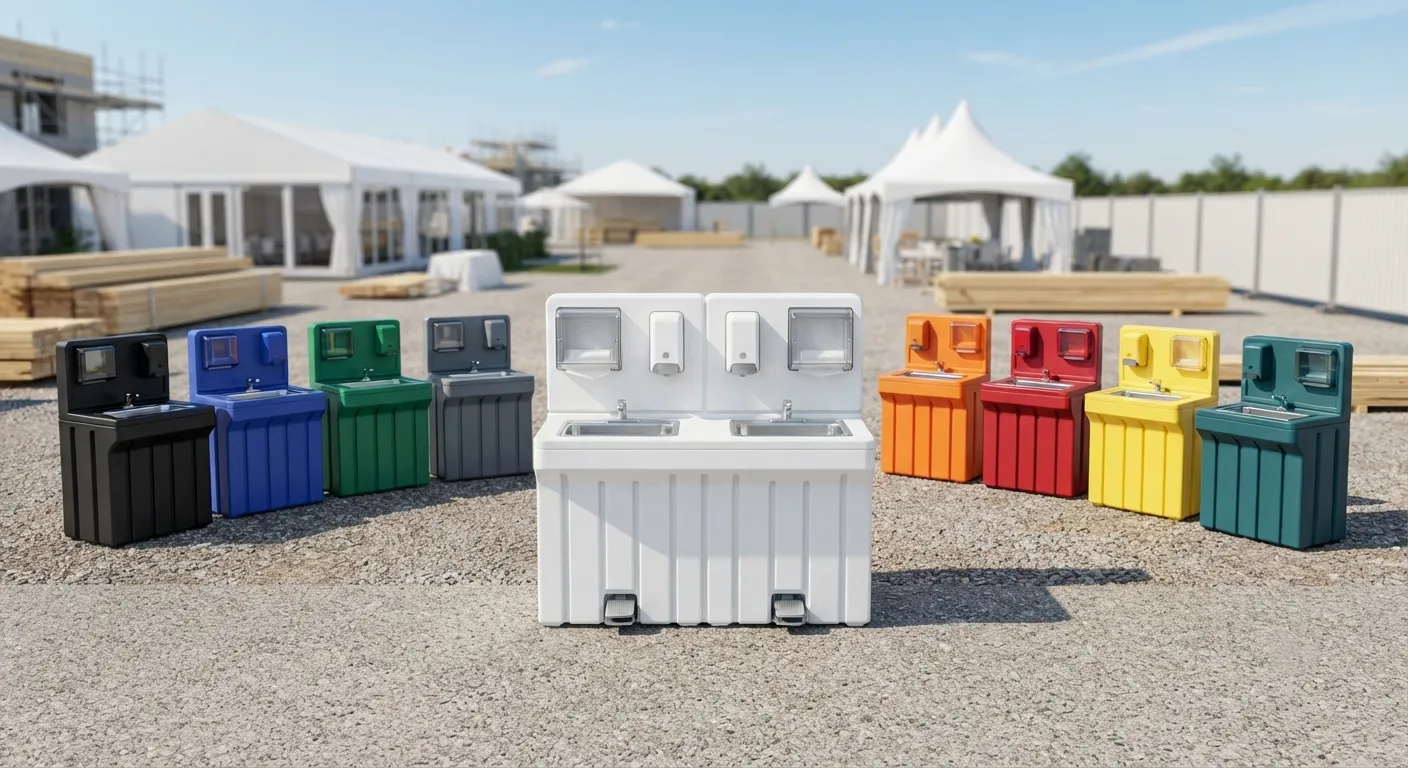
A portable sink runs on the same no-hookup idea. A portable sink rental or full handwashing station rental holds fresh water in a tank on top, gravity-feeds it through a spigot or foot pump, and catches the gray water in a tank underneath. No plumbing, no power needed on most models. Soap and paper towels sit in a dispenser on the unit, which matters more than people think: 29 CFR 1910.141(d)(2) requires washing facilities to include soap and towels or a hand-drying device, and hand sanitizer alone does not meet that. On a paint or coatings job, OSHA 1926.51(f)(1) requires washing facilities specifically because of the contaminant exposure, not as a general rule. A hand sanitizer station rental is a fine add-on but it doesn't replace a sink where that standard applies. Farms hiring hand labor fall under a different rule: OSHA 1928.110 calls for potable water, toilets, and handwashing within a quarter mile walk of the workers, one facility per 20 employees, which is why farm and agricultural restrooms get placed differently than a downtown Napa job site.
Do Camping Porta Potties Work the Same Way?
Not quite. A camping unit is usually a small self-contained toilet with its own tiny tank, meant for one or two people to dump at a dump station, not something a crew services on-site. Site-serviced rentals work differently: Napa Porta Pros drops off a full-size unit, comes back on a route, and pumps the tank in place instead of you hauling it anywhere. For a group camping trip or an outdoor event near American Canyon, 10.9 miles south of Napa, a rented standard unit or a camping porta potty setup covers more people for less hassle than packing individual camp toilets. On a construction site, the difference matters for headcount. OSHA 1926.51(c) sets toilet ratios by crew size: one facility for 20 workers or fewer, then one toilet seat and one urinal per 40 workers as the crew grows past that. A construction worker running to a porta potty on break needs that unit close and clean, which is also why placement matters. Curious how many units your crew needs? Check how many porta potties do I need or read the fuller OSHA portable toilet requirements breakdown.
| unit | day | week | month |
|---|---|---|---|
| standard | $100-$350 | $130-$500 | $125-$325 |
| ada | $200-$400 | $240-$400 | - |
| deluxe | $85-$1200 | $150-$290 | - |
Prices vary by unit and how long you need it; see porta potty rental cost for the full breakdown or monthly porta potty rental if you're planning a longer job.
What chemical goes in a porta potty?
A blue or green deodorizing liquid, usually a formaldehyde-free enzyme or quat-based blend, breaks down waste and masks odor between services. It's added at setup and topped off during pumping. Ask Napa Porta Pros about the specific product if you're near a vineyard or sensitive drainage area in Napa.
How often do porta potties get serviced?
ANSI/PSAI Z4.3 sets a baseline of one visit per week for up to 10 users across a 40 hour week, but high-traffic sites need more. A busy Napa construction site or a weekend event often gets two or three visits. See how often are porta potties cleaned for specifics.
Do porta potties need a water hookup?
No. Waste goes into a sealed tank and a chemical treats it, no plumbing required. Flushable and sink units carry their own small freshwater tank onboard instead of tying into a building line, which is why they can go almost anywhere on a Napa property.
Can I put a porta potty on the street in Napa?
Placement in the public right of way needs confirming with the city before delivery. Check the porta potty placement guide or porta potty permit requirements page, or call Napa Porta Pros and we'll help sort out where it can legally sit.
How is a porta potty different from a septic tank?
A porta potty is a small sealed, portable tank serviced on a route. A septic tank is a fixed underground system serving a home, typically pumped every 3 to 5 years depending on tank and household size. If your home system needs attention, see septic pumping service or septic tank warning signs.
Next step
Get a delivery date
Tell us the address, the dates and the headcount. We size the order and confirm the route.